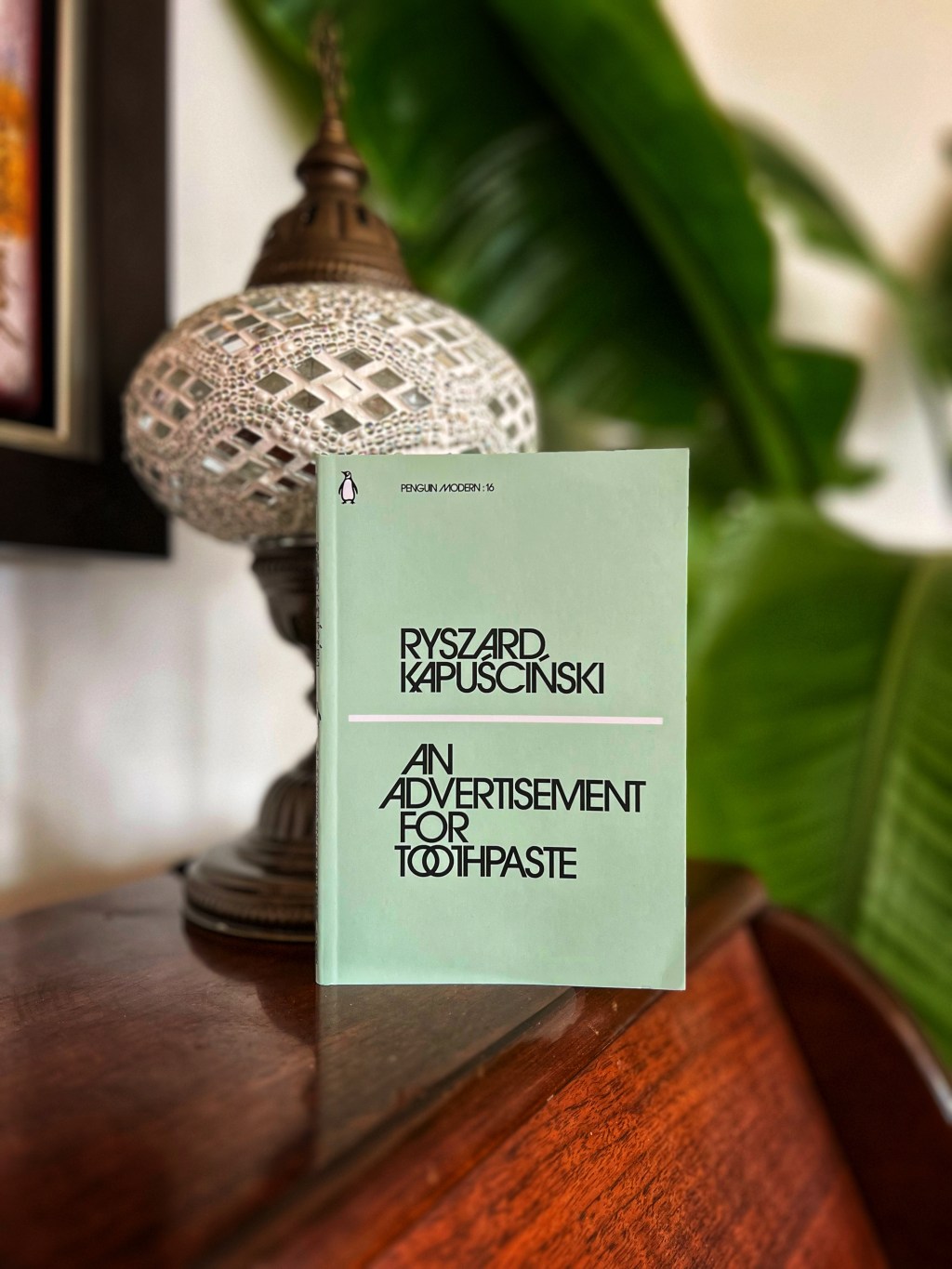
An introduction to literary or magic journalism
Ryszard Kapuściński (1932-2007), a Polish journalist, poet, photographer, and author, was renowned for his travel reporting and writings on the African coups and revolutions during the decolonization of the 1960s and 1970s, as well as his coverage in South America and Asia. Throughout his career, Kapuściński witnessed 27 revolutions and coups, was jailed 40 times, and survived four death sentences.
Kapuściński maintained two notebooks: one for the straightforward journalism he submitted to the Polish Press Agency, and another for his personal, impressionistic storiess that captured deeper truths than his fact-based reports could convey. He is credited with pioneering a new genre, distinct from magic realism, which he referred to as magic journalism or literary reporting. His approach involved portraying his subjects in a sympathetic light, prioritizing storytelling over journalistic objectivity to unearth deeper emotional truths, thereby making the “other” more accessible and relatable to his readers.
‘An Advertisement for Toothpaste’: a personal connection
Like many third-generation immigrants, I’ve often felt disconnected from my grandparents, who fled Europe shortly after World War II. They seldom discussed the war or its aftermath beyond stating, “It was hard, and people were crazy then.” Their silence left me with many unanswered questions about their past and my heritage.
Reading Kapuściński’s An Advertisement for Toothpaste provided me with context and a connection to their post-war behaviours. This collection of four essays, part of the anthology Nobody Leaves: Impressions of Poland, offers a glimpse into the societal changes in Poland during the 1950s. Despite its brevity—only 53 pages—the book’s impact lingers for days.
Detailed insights from the essays
An Advertisement for Toothpaste: This titular essay captures life in Pratki, a small town in post-war Poland, where the pursuit of material wealth overshadows basic health and aesthetics, such as dental care. This neglect serves as a metaphor for the deeper psychological scars left by the war.
When my maternal grandmother passed away, we discovered she had hoarded sewing machines and mountains of materials—reminders of her constant terror of scarcity from times when she owned nothing. This essay echoes her life: past traumas influence mundane behaviours and present as seemingly incoherent decisions.
Namely, the truth is that Pratki dances to the newest, dazzling hits, races all over the place on WFMs, stocks up on televisions, purchases electric sewing machines and Master Picasso curtains, while at the same time the idol of Pratki is still an idiot known throughout the province who is a fantastic entertainer, and at the same time Pratki forces a sick old lady out into the unknown, gets into brawls and foams at the mouth with hatred, and doesn’t brush its teeth.
An Advertisement for Toothpaste
Danka: This story confronts the harsh judgments faced by women deviating from societal norms. It details a public lynching of a young, beautiful, liberated woman by devout older women in her town, highlighting the perils of communal judgment and moral righteousness.
My own grandmothers, who never partook in such extreme actions, nonetheless shared this scrutiny which manifested itself as constant, sometimes cruel, gossip. They judged other women by trivial standards, such as the color of their lipstick (they once described one of my dresses as a handkerchief!) indicating deeper cultural tensions that transcend generations.
And our priest himself used to rail against depravity until it made you quake. He forbade girls to play volleyball. I myself don’t know what’s come over him now. I try to figure it out, but I just don’t know. So that girl comes up to us and she’s wearing a bathing suit, what do you call it, a bikini. A man sneezes and everything flies away. You know, sir, women don’t like saying good things about each other, but I’m not backward and I’ll admit that girl was like a rose blossom. Any man would go through torments and purgatory for one like her. Good Lord, sir, the women see her and you can hear them hissing. If she’d just kept going then maybe nothing would have happened, or if she’d crossed our path some other day then maybe nothing would have happened either, but we had just come out of church and there had been that scene in there that I told you about, and every one of us had a heart full of terror and bitterness that we wanted to get rid of. The girl came up to us and asked, “Are you ladies looking for somebody?”
Danka
The Taking of Elzbieta: This story explores the tension between sacrifice and free will through the eyes of impoverished parents whose daughter chooses a religious life over university. Her choice is left in doubt, as the mother claims her daughter was coerced by the Mother Superior, and is being held prisoner. The daughter’s letters are obviously censored. The mother’s letters to her daughter are never delivered. The parents’ grief is universal —the desire to protect children from harm at conflict with the responsibility of honouring their children’s independence.
A family portrait of my young mother and her brothers and our grandparents, dressed in their Sunday best, now reminds me not just of childhood scoldings but of my grandparents’ deep-seated pride and fears for their children’s futures.
I pick up a picture taken in those days. In this picture, Elzbieta is smiling, but the man with two heart attacks and the tall woman stand there very solemn. They are solemn because they are bursting with pride. (…) Think about the mother who left her lungs to rot and the father who wore out his heart so their daughter could become a teacher.
The Taking of Elzbieta
The Stiff: The final essay, portraying six men’s journey to bury a young miner, highlights communal solidarity and human dignity. This contrasts with the individualism seen in the three earlier stories, providing a hopeful note on the capacity for collective support and duty during hardships.
In the end, we went on. The dawn met us. The sun warmed us. We kept walking. Our legs buckled, our shoulders went numb, our hands swelled, but we managed to carry it to the cemetery – to the grave – our last harbour on earth, at which we put in only once, never again to sail forth – this Stephan Kanik, eighteen, killed in a tragic accident, during blasting, by a block of coal.
The Stiff
Conclusion: Literary Journalism as a bridge to understand the “other”
None of my grandparents were Polish: Russian and Belorusian (which, depending on the year, was a part of Poland, Germany, Russia…) An Advertisement for Toothpaste‘s stories are not about my grandparents and yet they are. What I considered to be character flaws and annoying rigidities, belonging only to them and impacting my parents and me, I now consider more sympathetically. They were part of a cohort of millions of people completely and forever messed up by the war.
I wish I had been more curious. Maybe then I wouldn’t have wasted the time when my grandparents were alive thinking of them as being so different from me, and exploring instead our commonalities: if I couldn’t even do that with my own family, what hope is there for the bigger bridges, overcoming differences of religion, geographies, political divides, race? I know I am not the only one who struggles to accept the “other”, anyone who is different.
Kapuściński’s essays are not just historical records; they are narratives that breathe life into the statistics and facts of history. They compel us to confront our own biases and encourage us to bridge cultural and generational divides. In today’s polarized world, filled with quick judgments and superficial readings, Kapuściński’s approach to journalism is an exercise in empathy and understanding.
As readers and global citizens, we have the power to support narratives that foster connection rather than division. Let us champion authors like Kapuściński who portray the complexities of human experience, promoting a richer, more empathetic understanding of the world. In embracing these narratives, we do more than bear witness; we engage in an act of collective curiosity and empathy, a necessary step toward bridging the divides that threaten the fabric of our societies and the peace of the world.
We are what we read. Let us read with curiosity and love about the “other”.


Leave a comment